
This picture was taken near Rockport Texas on our way home last spring (6 April 2006). The Redhead is a diving duck and eats mainly vegetation but will eat the odd small animal such as frogs and salamanders. They're a fairly small duck weighing 2-2 1/2 pounds and they've been known to lay their eggs in other birds nests, especially Mallards.
Monday, October 02, 2006
Redhead Duck

The hunter
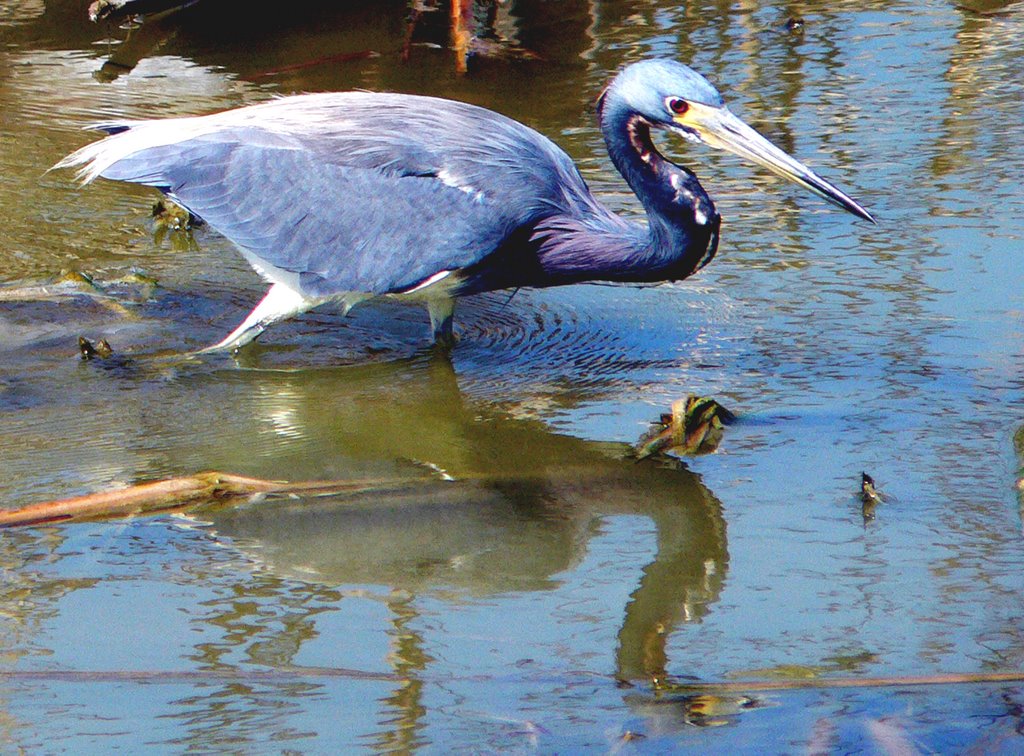
This is a Tricolored Heron in the hunt mode. The picture was taken on 23 March 2006 at Port Aransas. I was standing on the board walk watching him as he walked very quickly up and down, occassionally shooting his neck forward to catch a small fish or insect.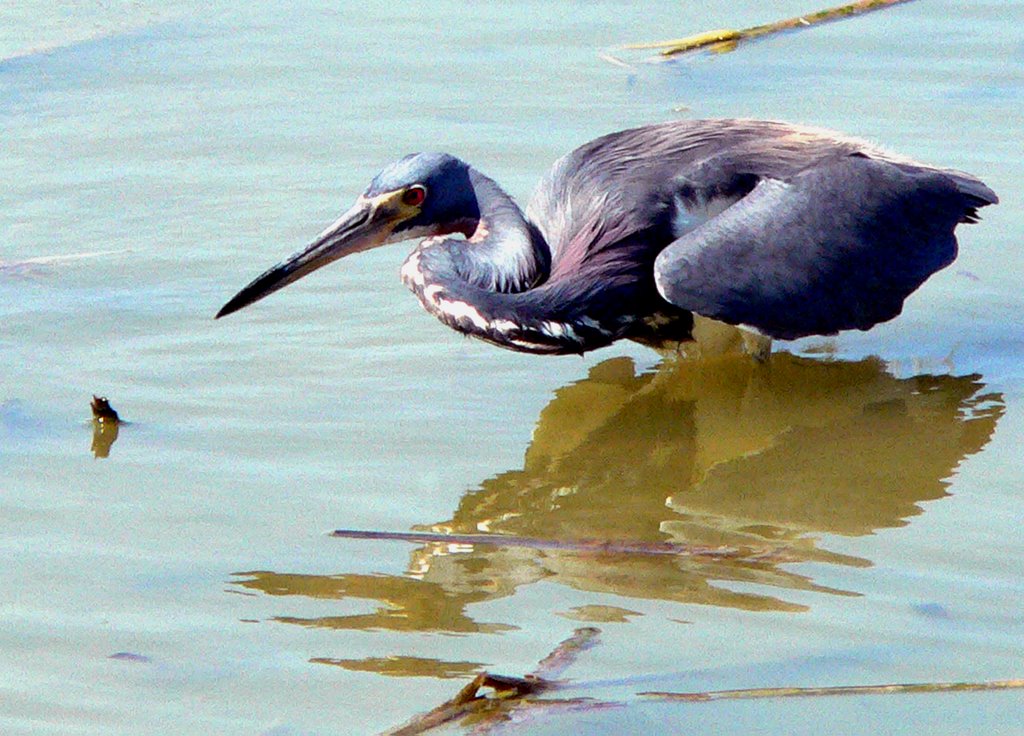
Misty morning
This picture was taken way back on 24 January 2006 near Mission Texas. I didn't initially publish this picture because I didn't think it was good enough. If you look at it, it's not as clear as it could be, but there's something kind of mystical about the picture. It was taken fairly early in the morning on a day that had a lot of fog. The sun was trying to burn through the fog creating a glow in the water while an assortment of waterfowl (Glossy Ibis in the middle) languish on a log and in the water. One of my favourite shots even though it isn't really clear.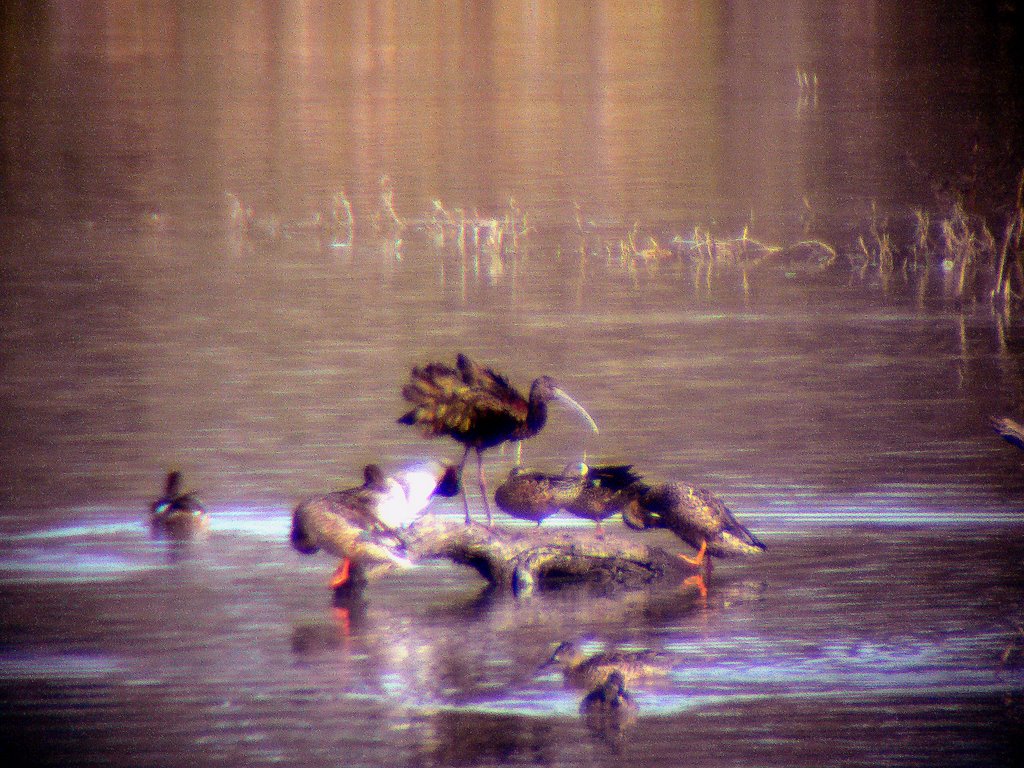
Male Mallard

This picture was taken at Rockport Texas on 6 April 2006. The Mallard is the most common duck in North America and one that most people can identify.
Thursday, July 13, 2006
Southern Bell Hibiscus
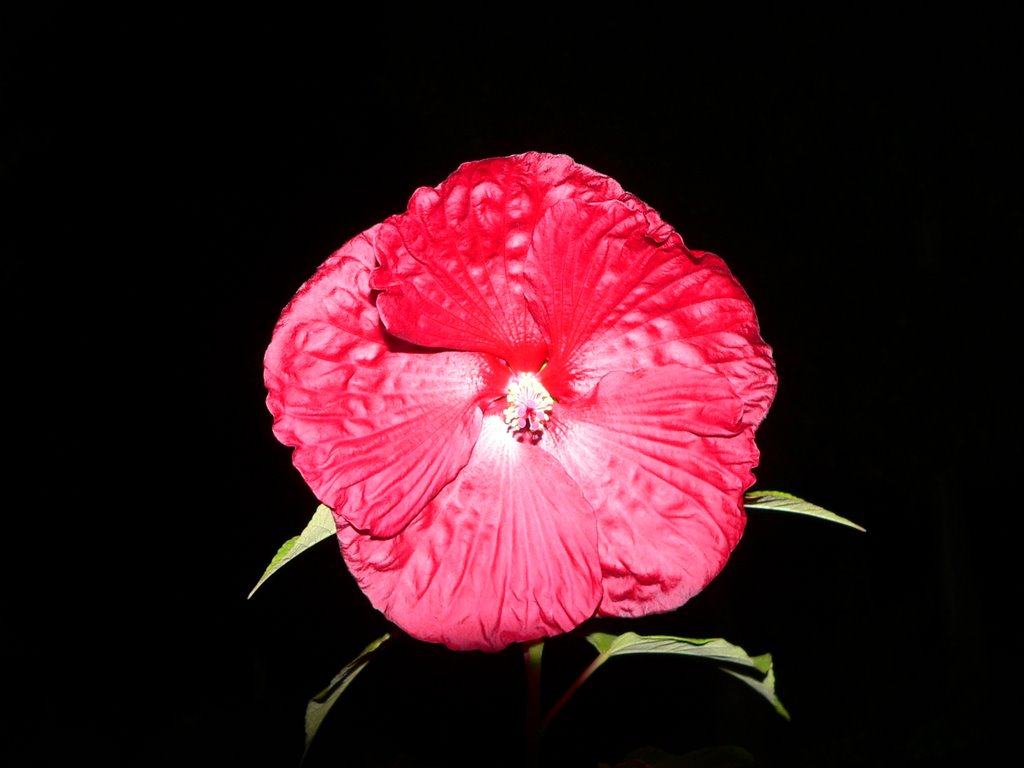
This picture was taken in our back yard last September. It was a night shot taken with a flash looking straight up as the blossom was drooped over. Unlike the following two entries, this picture hasn't been re-touched using Photoshop.
Back yard Deer - Fun with Photoshop

The top picture was taken last September. I sent it to my brother asking him how do you remove trees in Photoshop. His daughter, Laurie was visiting at the time and she's a Photoshop expert. The bottom picture is what I got back. What's that saying about not believing anything you here and only half of what you see?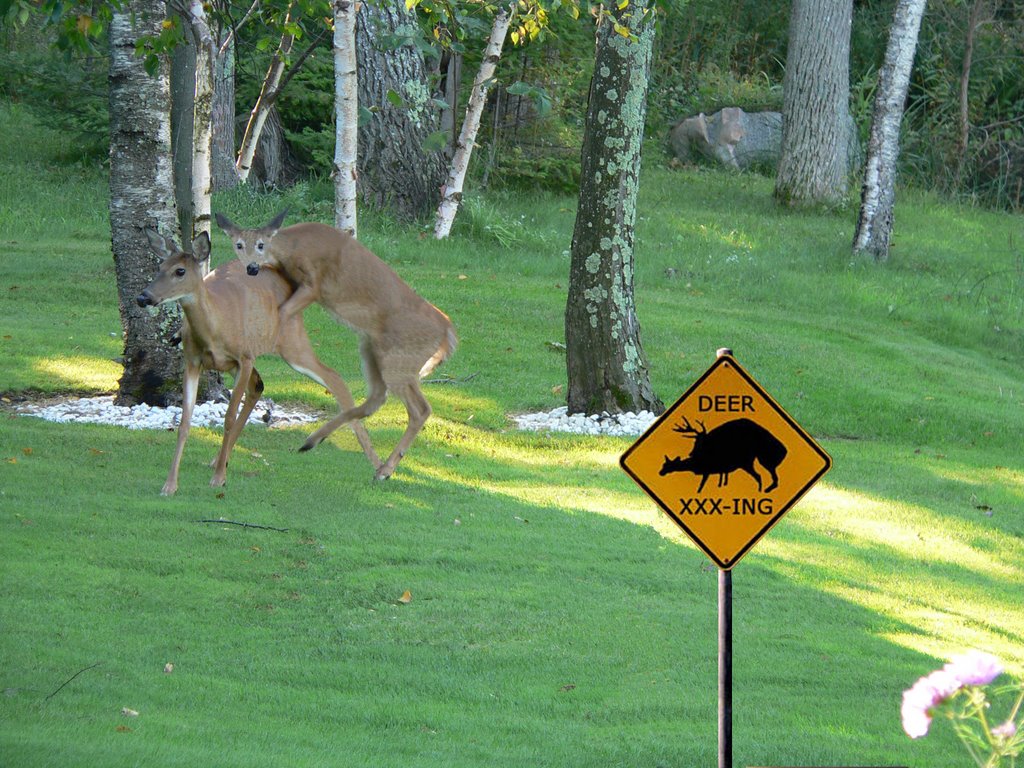
Rose Breasted Grosbeak - Fun with Photoshop
 I haven't taken too many pictures lately so thought I'd post some from last year. As you can see, the first picture isn't very good. I asked a Niece of mine how to replace the background using Photoshop. She walked me through it and I replaced the background with a picture of the sky which I took. Makes for a much better picture, don't you think?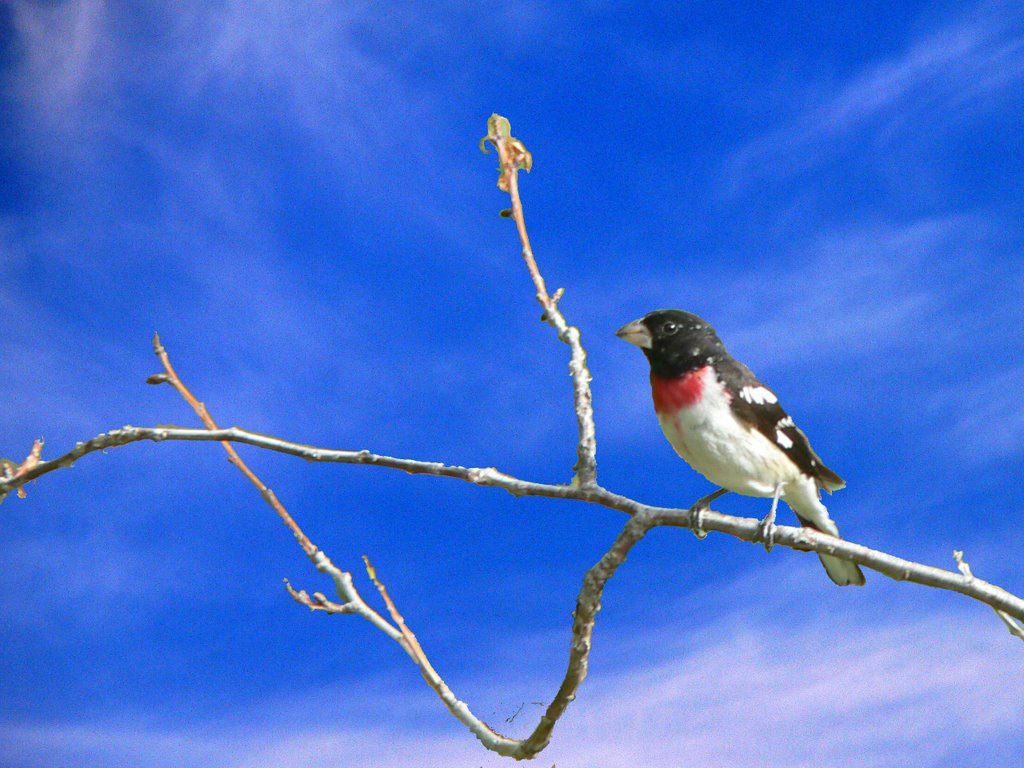
Sunday, May 28, 2006
Female Hooded Merganser
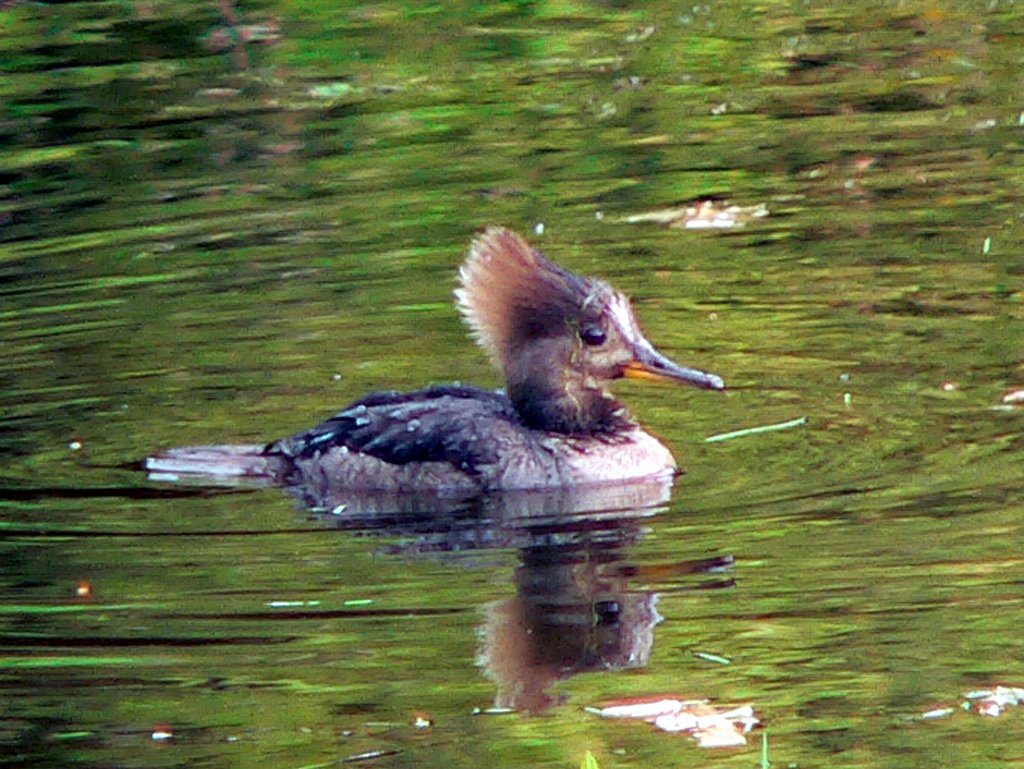
These pictures were taken in our back yard, the first two on May 17th and the last one on 4th May 2006. I never did get a good picture of the male who once the female starts incubating the eggs, leaves and doesn't assist in the incubation or rearing of the chicks. She's nesting in a Wood Duck house that is on the edge of one of our ponds. When the eggs hatch, she flies down to the nearby water and then calls her babies out within 24 hours of them hatching. If she isn't satisfied that the surroundings are safe, she will then march her brood off to a safer place. Her clutch has now hatched but we never did see the little ones. 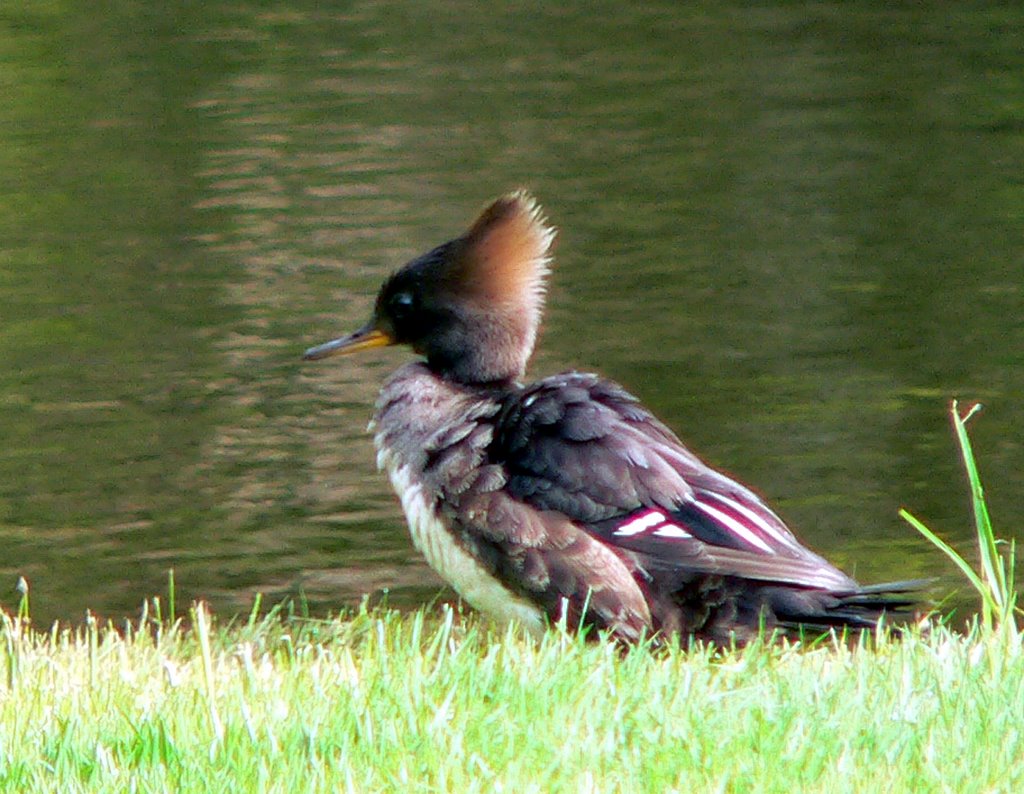 Hooded Mergansers are fish eaters and are very good at catching small fish. Their eyesight underwater is very good. They actually have a third eyelid that acts like a pair of goggles when swimming underwater.
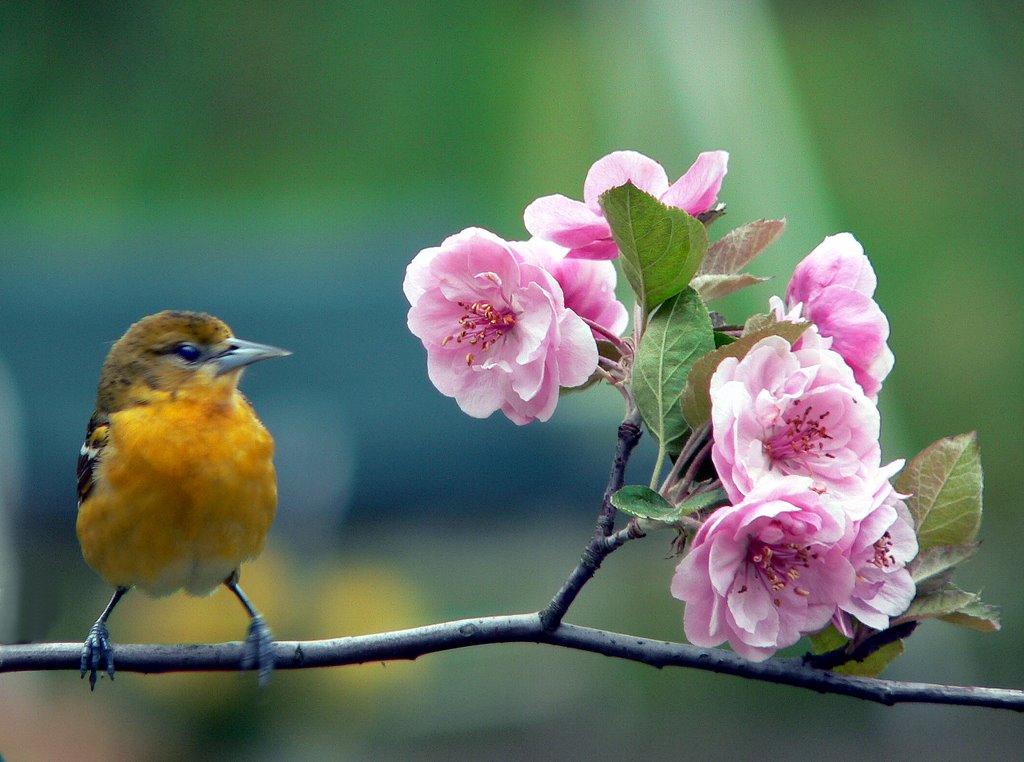
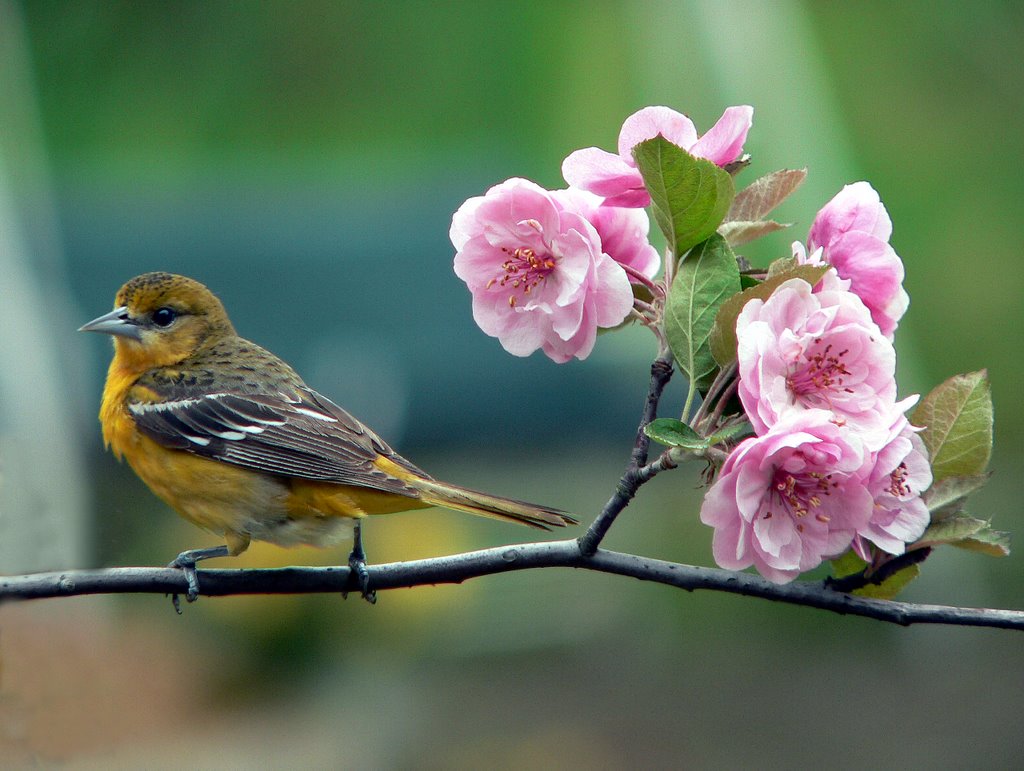
Baltimore Oriole

These pictures were taken in our backyard on May 25th 2006. For awhile the Baltimore Oriole was combined with the Bullocks Oriole and was known as the Northern Oriole, but they found that there were significant differences between the two and therefore they reverted back to their former names. Orioles like tall trees bordering on open spaces and are particularly fond of oranges and sugar water in and Oriole feeder, similar to a hummingbird feeder. You may wonder why I have four pictures all on the same Crab apple branch. There just happened to be an orange placed just to the left, but outside the picture. It made for a nice picture but it was difficult to get them to look into the picture.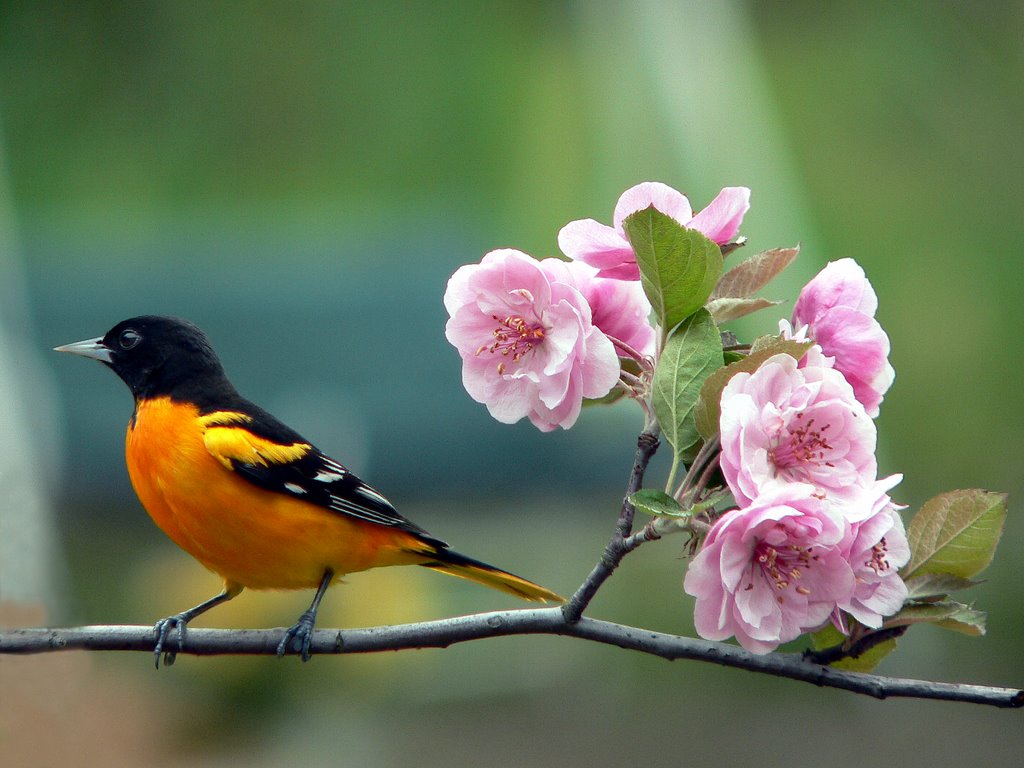
Indigo Bunting
 These pictures were taken on May 24th 2006 in our back yard. In contrast, the female is mainly brown with occassionally a hint of blue on the tips of their feathers. They're quite remarkable navigators. They migrate at night using the stars to navigate. Experiments have been done where they've captured them and then released them in an area totally foreign to them. They still navigated back to the exact location they normally migrate to. Amazing!!! Humans are supposed to be the smart ones and some of us have trouble getting home after spending a night at the bar.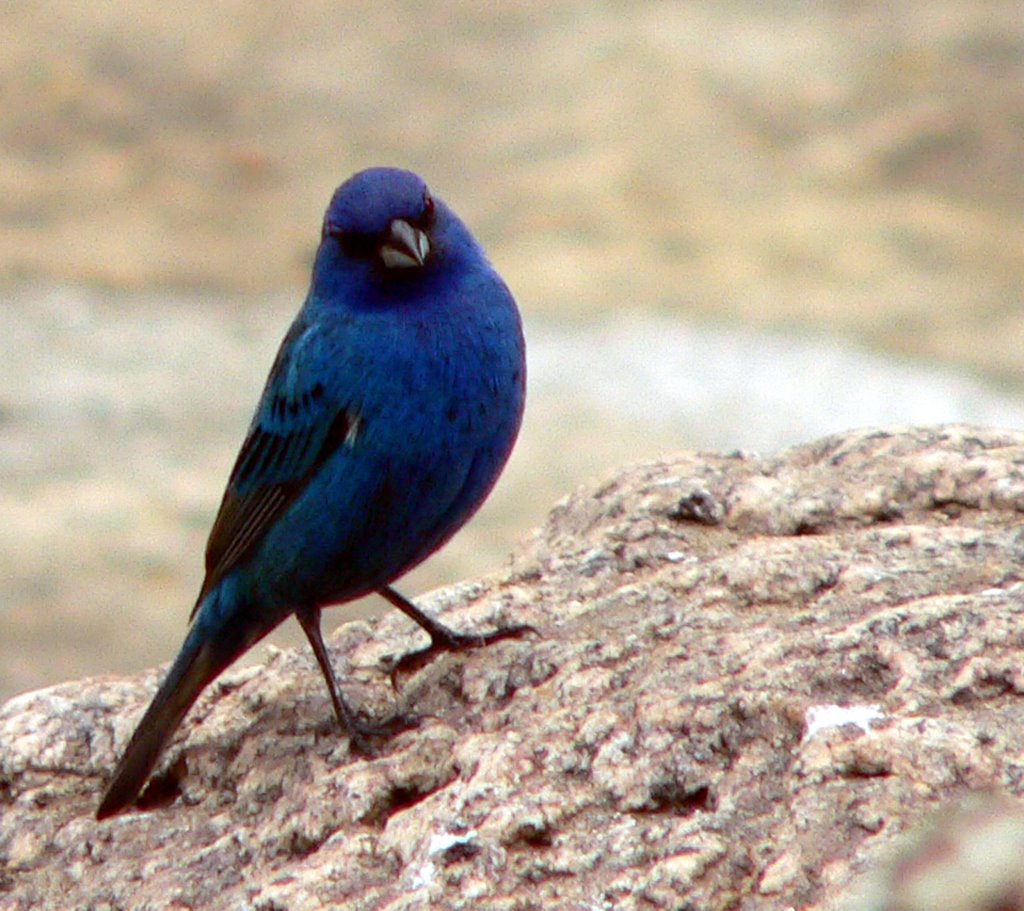
Thursday, May 18, 2006
Green Heron

This picture was taken in our back yard on May 15th, 2006. Also known as Little Green Herons, they are the smallest of our Heron family except for the Least Bittern. They are solitary in nature but may be seen in pairs particularly during mating season. They have a concealed nest in shrubs or low tree branches. We actually have a pair of them visiting our pond on a regular basis. We're hoping they will nest here and that we'll get a chance to see their young. Stay tuned!
Veery

This picture was taken on May 15th 2006 in our back yard. This is a bird that is heard but seldom seen. I guess I got lucky as he perched on a nice birch tree branch in plane sight for about 10 minutes. His usual habitat is the deep dark dense part of the forest eating a mixture of insects and fruit. He has good eyesight in the dark and migrates all the way to South America. He does this at night, keeping in touch with others of his species by calling. He's in the Thrush family but has fewer spots on his breast than most Thrushes.
White Crowned Sparrow
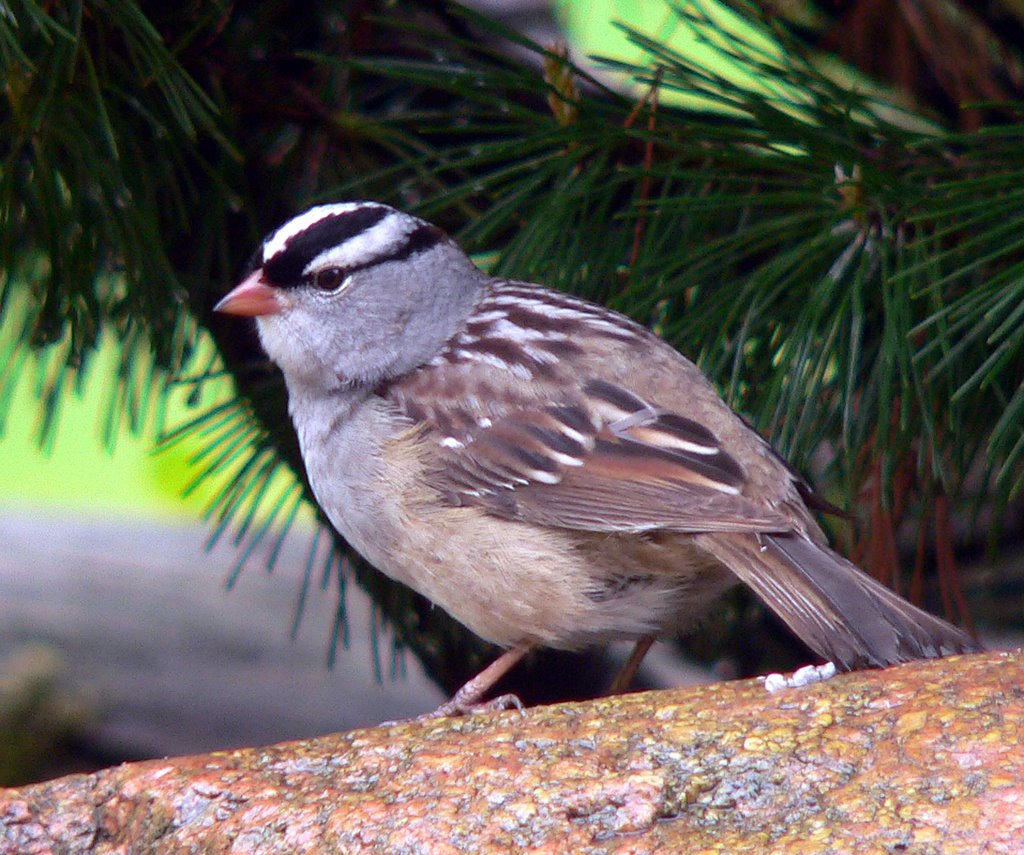
This picture was taken in our back yard on May 15th, 2006. Apparently he is easy to tame and therefore he has been used extensively in scientific experiments, especially related to bird migration.
Rose Breasted Grosbeak
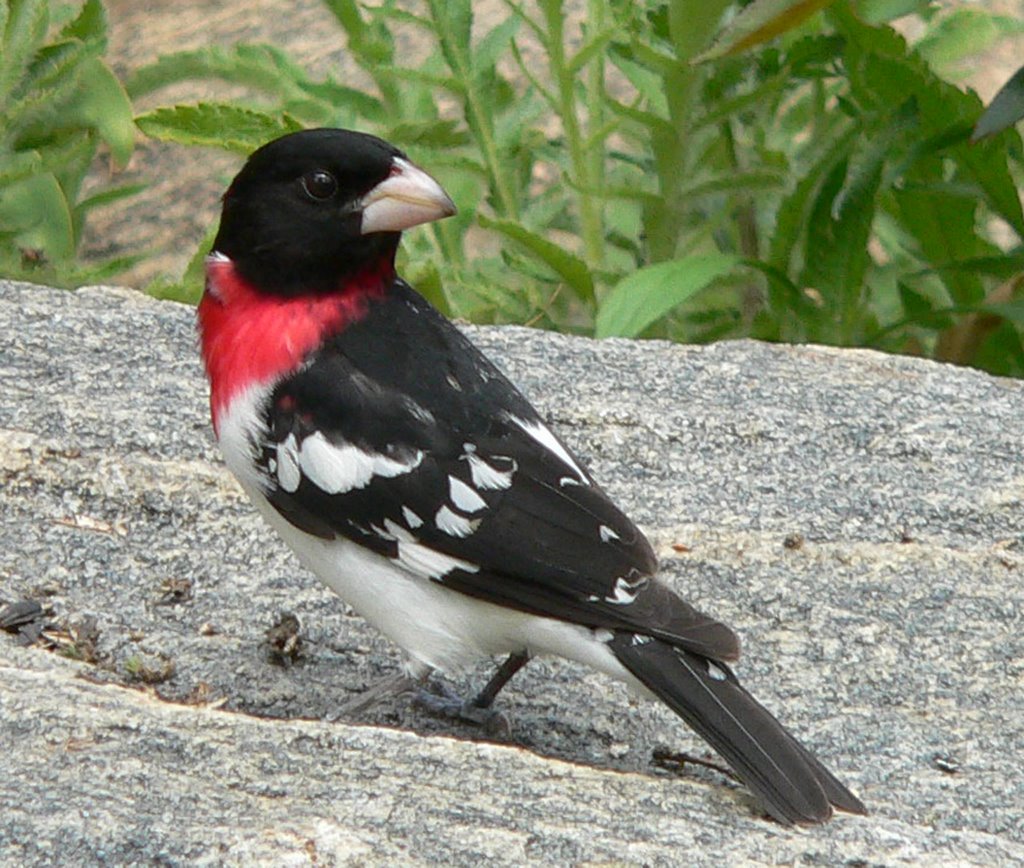

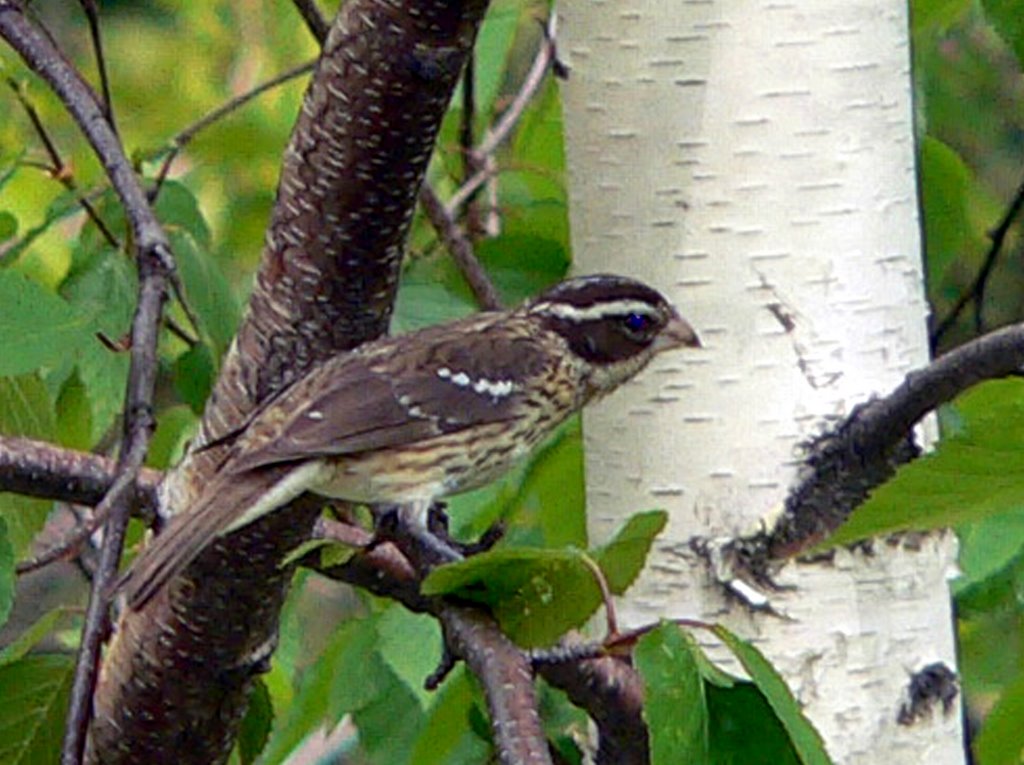
I took these pictures in our back yard on May 13th 2006. The two upper pictures are the male while the lower picture is the female. I'm surprised that we don't have homosexual males. This is one of my favourite birds. The males song is similar to that of a Robin, only more melodious. When courting, he will sing in flight while flying after the female. He sometimes picks the nest site and takes his turn at incubating the eggs and even sings while sitting on the nest.
Wednesday, May 17, 2006
Common Grackle
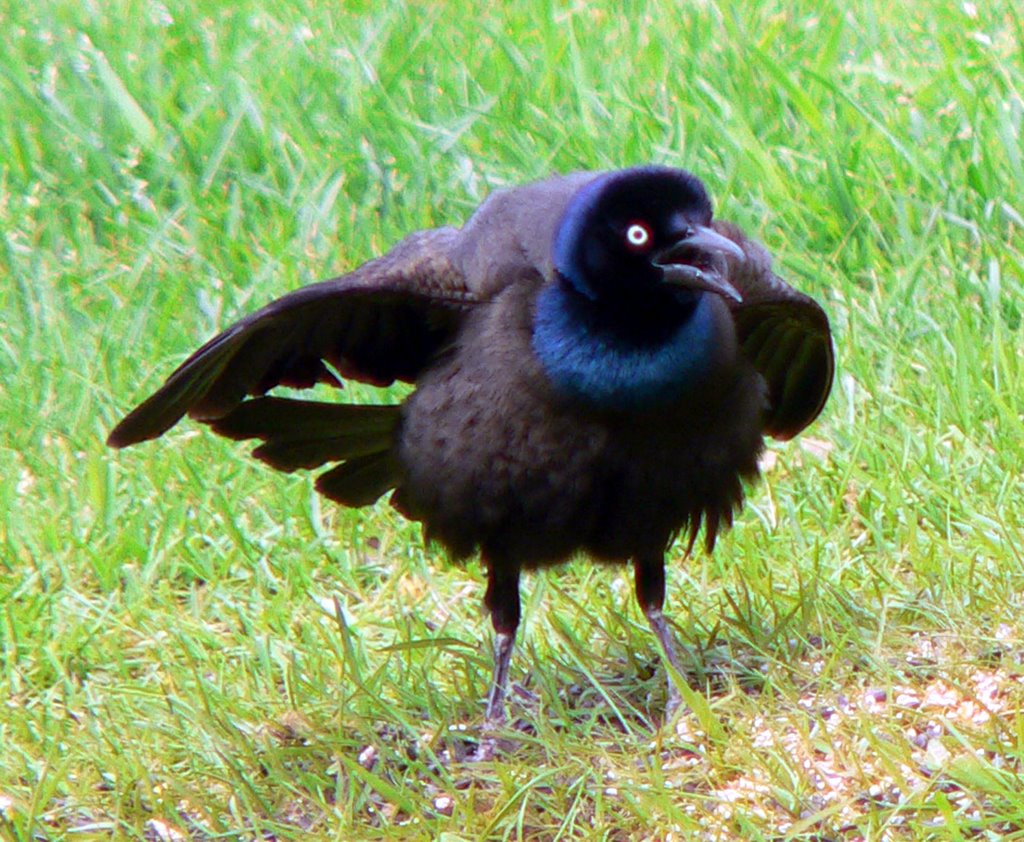
Booga booga booga!!! Did I scare ya, eh, did I scare ya. I'm soooo big!!! I took this picture on 16th March in our back yard. I was sitting in my bird blind getting bored waiting for something interesting to show up when this guy decided to put on a display. He wasn't doing it for me, I think it was for his female friend.
Sunday, May 14, 2006
Barn Swallow
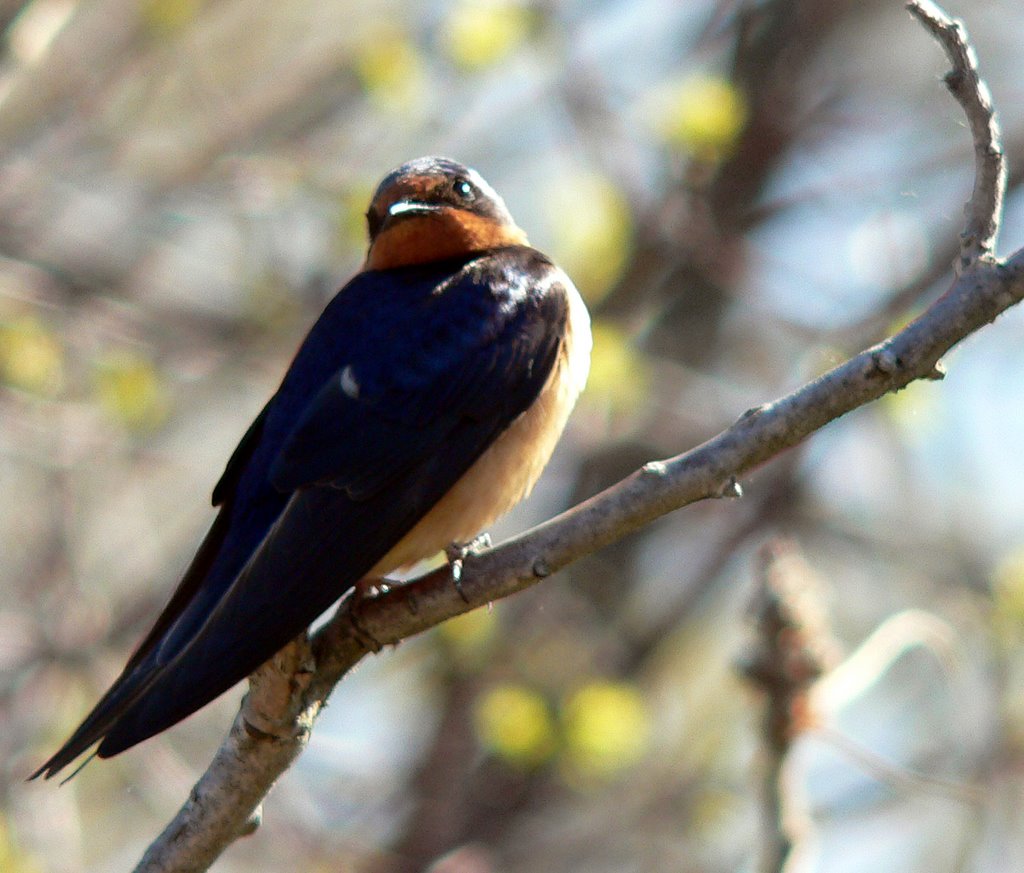
This picture was taken at Point Pelee, Ontario on May 7th, 2006. These little guys are good friends of humans as they eat nothing but insects which of course includes mosquitoes. They are excellent flyers and can easily change direction at full speed. There nests are made of mud and straw and they usually like to build their nests about 5 inches below the ceiling in a building. Placing shelves at that height in a building where they have access may attract them. They are communal in nature and like to nest in colonies. If a predator such as a cat comes near, the entire colony will attack the cat in an effort to drive it away.
Screech Owl
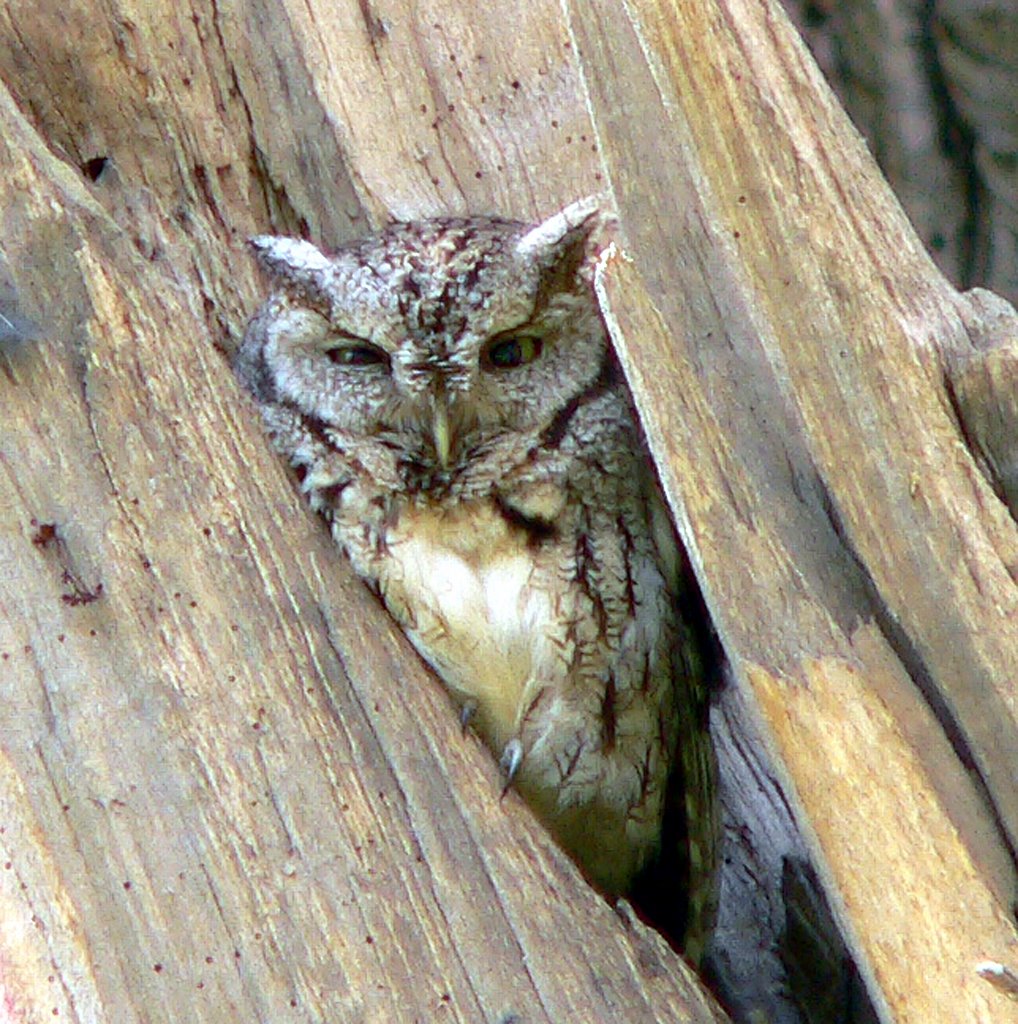
This picture was taken on May 6th 2006 at Point Pelee Ontario. They are one of our smaller owls, only measuring about 8 - 9 inches long. They don't migrate. What appears to be ears aren't really ears at all. They are just tufts of feathers that look like ears.
Tuesday, May 02, 2006
Water Fall

This picture was taken at Springmount, just west of Owen Sound on May 1st 2006. Most of my pictures are of birds, but I do enjoy anything that is beautiful. I thought that this fit that criteria.
Chipping Sparrow
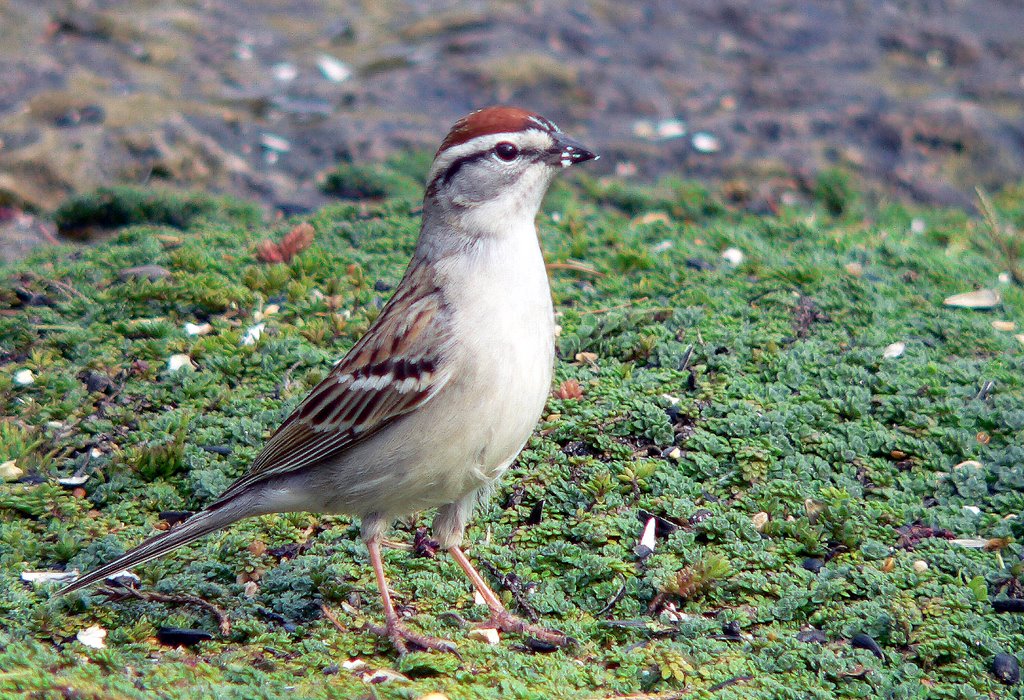
This picture was taken this afternoon, May 2nd 2006. I was sitting out on our patio and this little guy was just dying to have me take his picture as you can tell by his pose. Normally they don't pose with their head so high. Sparrows are some of the hardest birds to tell apart and the Chipping Sparrow makes it even more difficult as they can change the feathers on their head and throat up to six times per year. The rest of the body feathers are only replaced once or twice per year.
Blue Jay
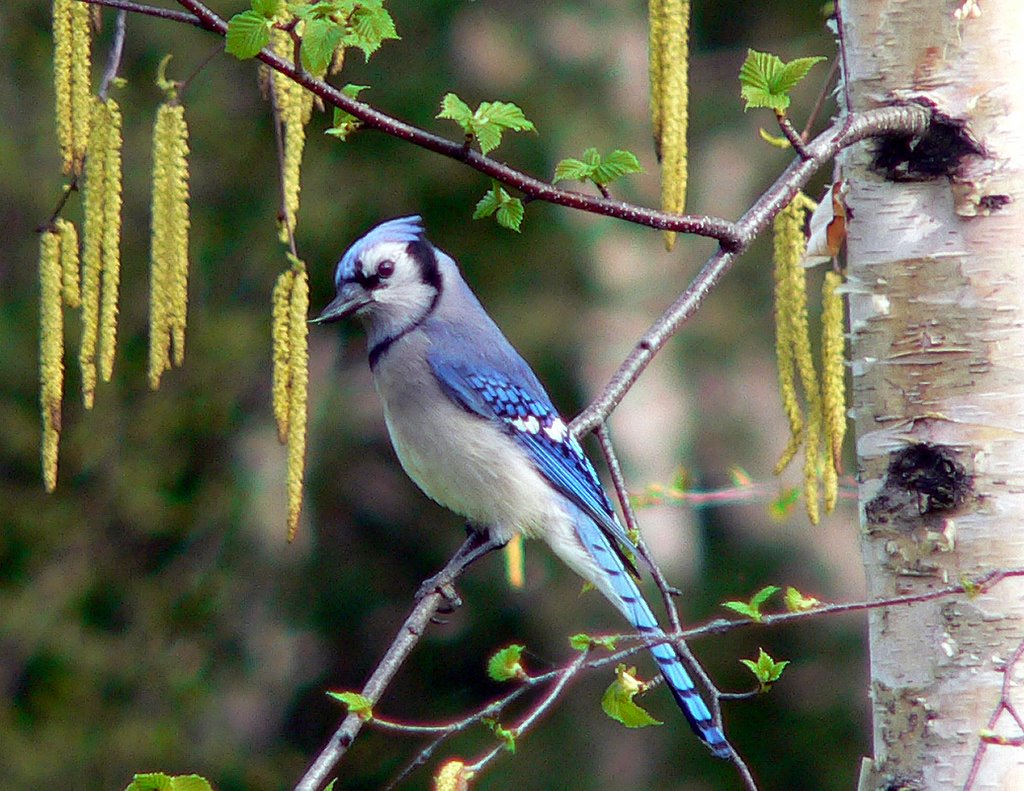
This picture was taken May 2nd 2006 in our back yard. You can tell it's spring by the seed pods hanging from the birch tree and the leaves just starting to come out. Blue Jays are a very noisy bird and they can imitate others. One bird that they've been known to imitate is the Red Tailed Hawk. Do they do this to warn others of the presence of a Red Tailed Hawk or just to frighten other birds away from their food, or are they just being the jester saying, ha ha I fooled you? Who knows. I guess only the Blue Jays know for sure.
Subscribe to:
Posts (Atom)


 Posts
Posts

